

Arterial Ultrasound Diagnostics
What Are Arteries and Why Does Their Condition Matter So Much?
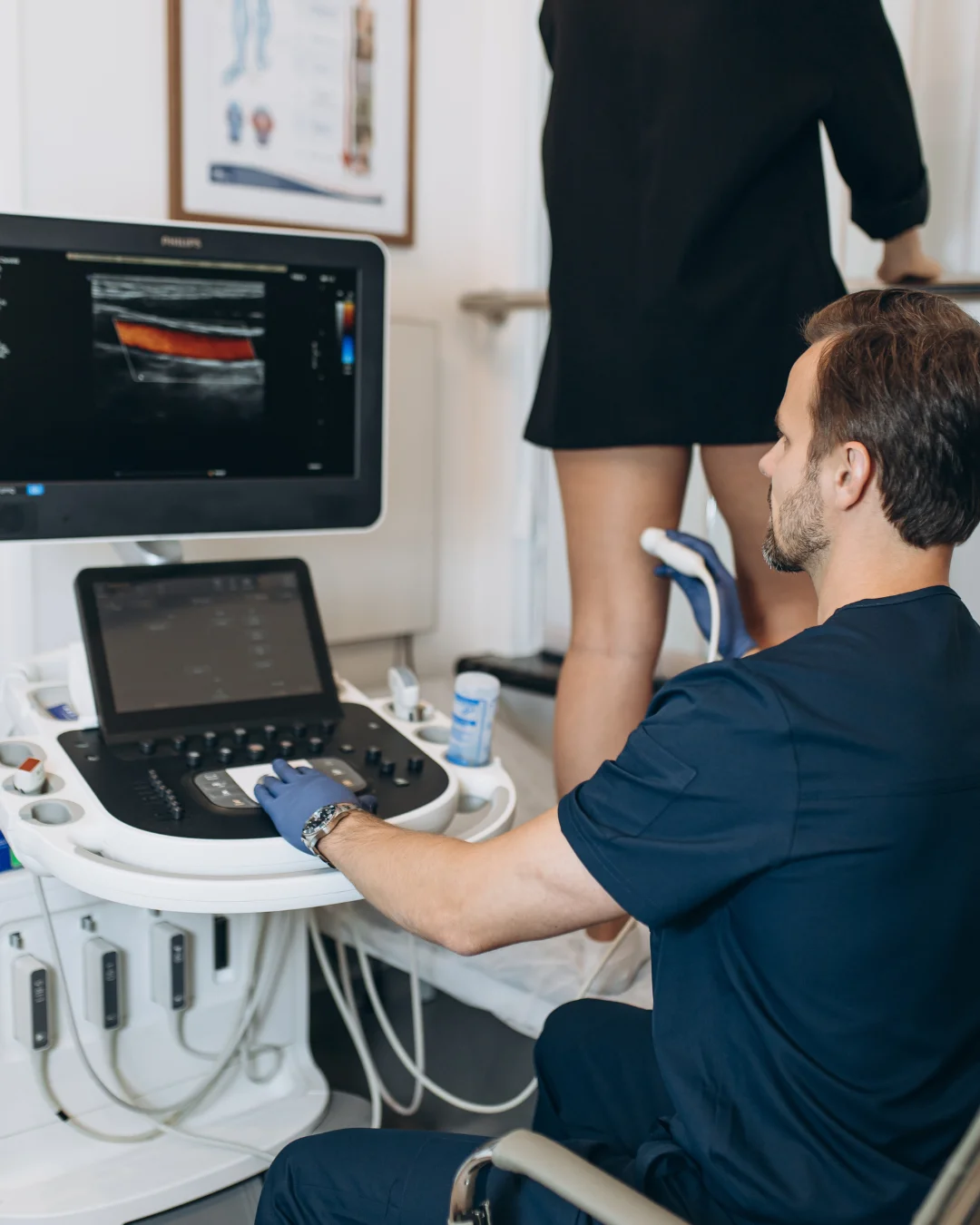
Arteries are the body's main vascular "highways," carrying oxygen- and nutrient-rich blood from the heart to every organ and tissue. Unlike veins, arteries have thicker muscular walls and operate under high pressure. Any narrowing or obstruction in an artery leads to oxygen starvation (ischemia) of tissues, which can cause serious complications. Arterial ultrasound (duplex/triplex scanning) assesses vessel lumen and blood flow velocity and detects abnormalities at the earliest stages.
When to Get Checked
Lower limb arterial ultrasound: pain or cramps in the calves while walking ("intermittent claudication"), a feeling of coldness and numbness in the feet, pale or bluish leg skin, wounds that don't heal for a long time.
Neck and head (brachiocephalic vessel) ultrasound: frequent dizziness, ringing in the ears, sudden loss of balance, worsening memory or vision.
Upper limb arterial ultrasound: pain, weakness, paleness, or coldness of the fingers.
What Conditions Can Ultrasound Detect
- Obliterating atherosclerosis — cholesterol plaques that narrow the artery lumen and block normal blood flow
- Thrombosis and embolism — blood clots that threaten acute circulatory disruption
- Aneurysms — pathological widening or bulging of the artery wall with a risk of rupture
- Obliterating endarteritis and vasculitis — inflammatory diseases of the vessel wall
- Raynaud's syndrome — spasm of small finger arteries triggered by cold or stress
Book a comprehensive consultation
with a phlebologist and vascular surgeon
We will respond as soon as possible
Take care of your vascular health today