

Glue (Cyanoacrylate) Ablation
Contraindications
- Pregnancy
- Acute decompensated conditions
- Skin infections of the lower limbs
- Thrombosis or occlusion of lower limb arteries
History of the Method
A relatively new technique from the non-thermal vein obliteration group. The use of cyanoacrylate to treat varicose superficial veins dates back to 2010, when the method was first applied by Almeda (USA). Studies have shown that inside the body, the cyanoacrylate polymer gradually breaks down into formaldehyde and the corresponding alkyl acetate, but large doses of formaldehyde are toxic to the human body. Modern medical practice mostly uses n-butyl-2-cyanoacrylate or the more modern octyl cyanoacrylate — compounds that are safer for the living body. The certified VenaSeal glue ablation method is used, which includes a single-use kit with special delivery catheters and the adhesive itself.
How It Works
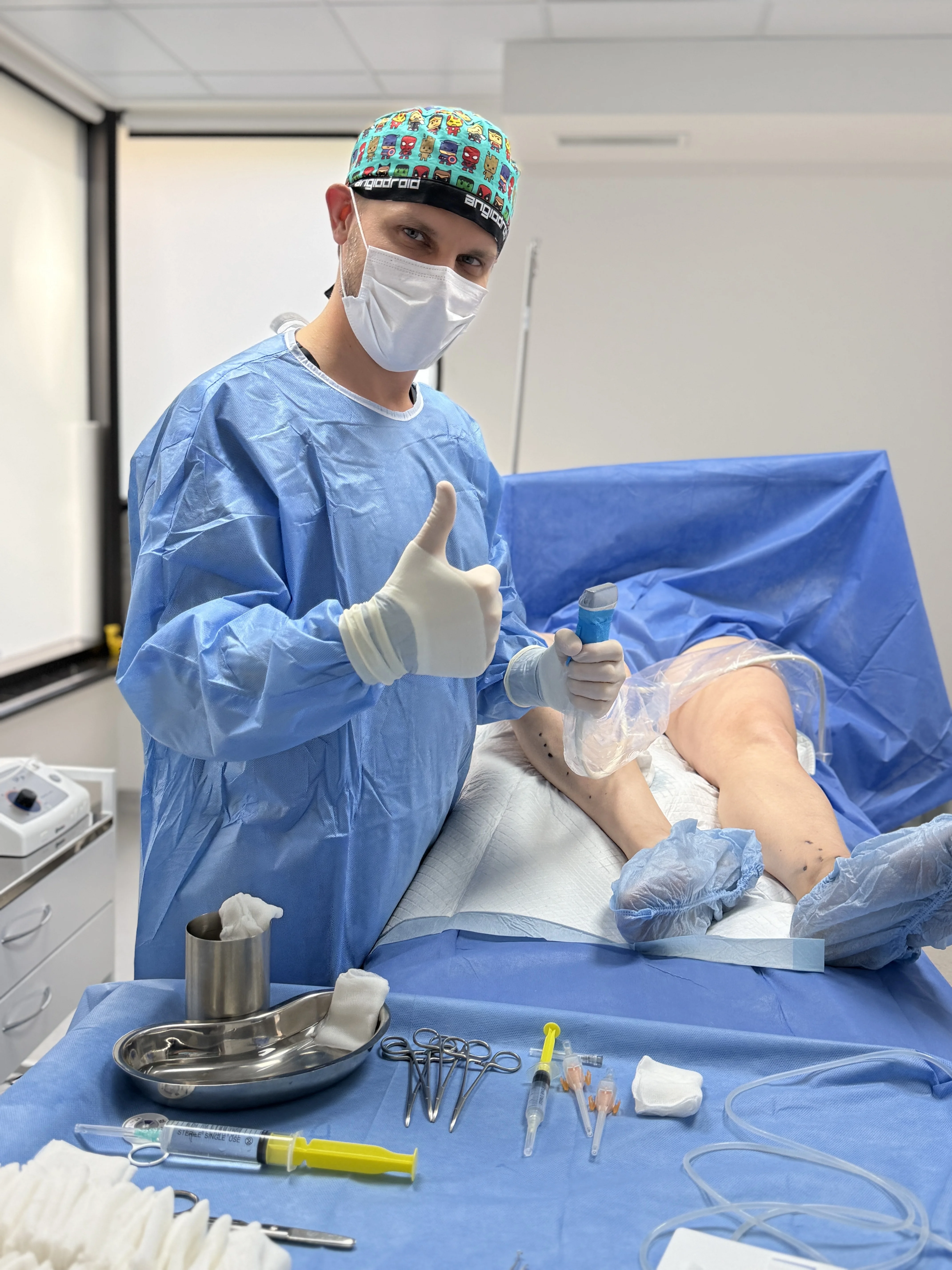
The basis of the method is the ultrasound-guided injection of a special biocompatible adhesive directly into the area of the incompetent vein. The method doesn't require tumescent anesthesia, so it's recommended for elderly patients or those with an allergic reaction to the components of the tumescent solution or anesthesia.
After the Procedure
No compression garments are needed after the procedure, which makes the method popular in warm countries or for patients who find it difficult to select or wear compression garments.
Book a comprehensive consultation
with a phlebologist and vascular surgeon
We will respond as soon as possible
Take care of your vascular health today