

Radiofrequency Ablation
Contraindications
- Allergic reaction to the components of the tumescent solution or anesthesia
- Pregnancy
- Tendency to keloid scar formation
- Connective tissue disorders in the decompensated stage
- Lower limb atherosclerosis with arterial occlusion or thrombosis
History of the Method
Radiofrequency ablation (RFA) emerged as a technique in 1998 thanks to American researchers. The first positive results were published by Goldman in 2000.
How It Works
The technique used a 460 kHz generator with up to 25 W of power and a single-use electrode catheter to deliver bipolar radiofrequency energy. These devices provided controlled heating of the vessel (up to 85 °C) to damage the collagen fibers of the vein wall. Because the heating was limited (below 100 °C), the main adverse effects — boiling, vaporization, and tissue carbonization — could be avoided. Radiofrequency obliteration converts radiofrequency energy into heat, which coagulates the endothelium of the vein wall: the protein and lipid structures of the vein wall denature, the vein constricts, and fibrosis forms. One of the first RFA devices, still popular today, is the Closure catheter system by VNUS Medical Technologies (USA).
The Procedure
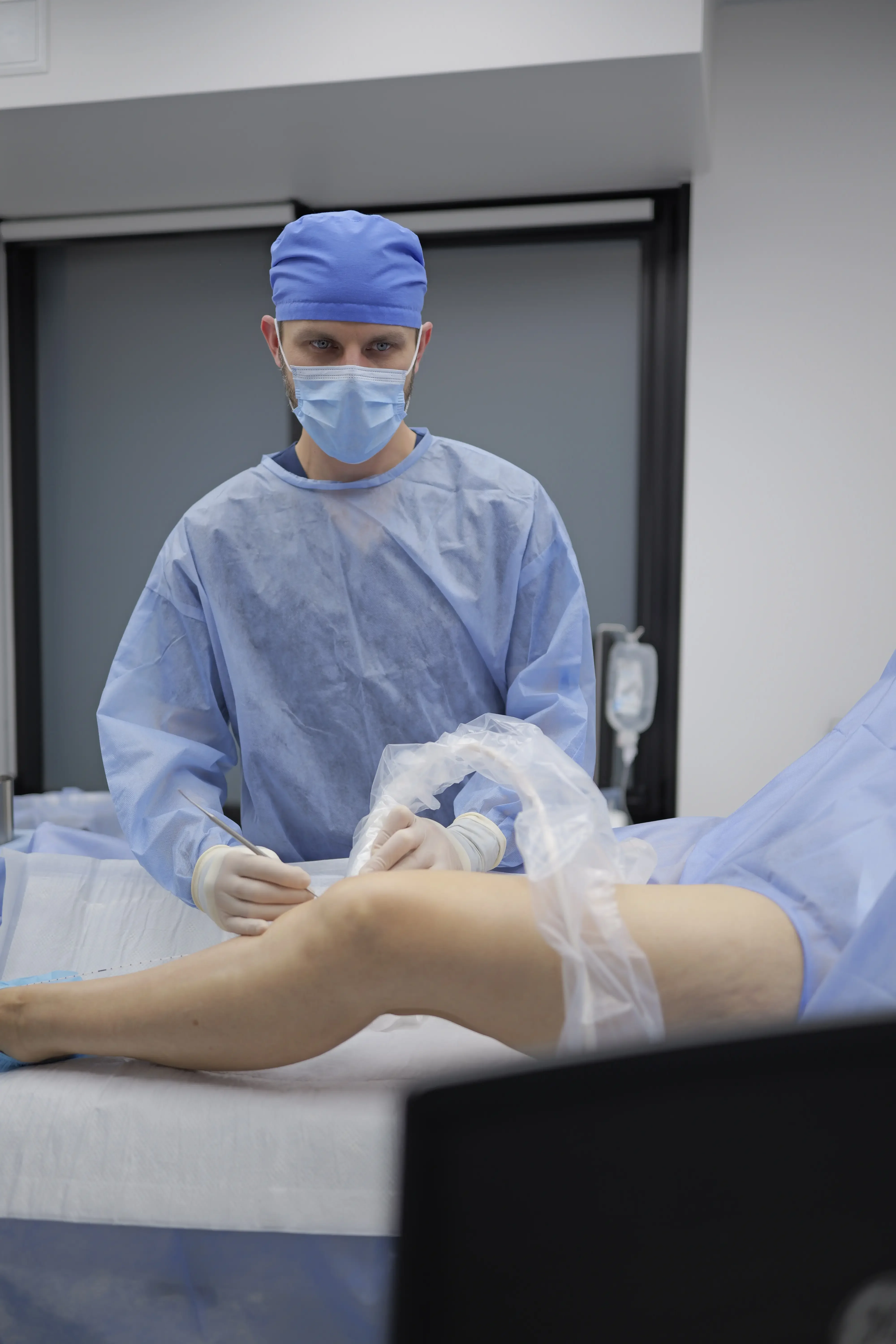
The procedure closes the altered, non-functioning vein using thermal radiofrequency energy — blood flow is redistributed to healthy veins. The method is performed through punctures, with no sutures or incisions as in classic surgery, with mandatory local tumescent anesthesia along the treated vein.
After the Procedure
Wearing compression garments as recommended by the doctor is required during the postoperative period.
Book a comprehensive consultation
with a phlebologist and vascular surgeon
We will respond as soon as possible
Take care of your vascular health today