

Endovenous Laser Ablation
Contraindications
- Allergic reaction to the components of the tumescent solution or anesthesia
- Pregnancy
- Tendency to keloid scar formation
- Connective tissue disorders in the decompensated stage
- Lower limb atherosclerosis with arterial occlusion or thrombosis
History of the Method
The first successful use of endovenous laser ablation for treating varicose veins of the great saphenous vein was reported by Bone in 1998. In 2001, Proebstle and colleagues developed an experimental EVLA model.
How It Works
The method relies on laser energy that acts on the vessel wall, leading to its obliteration and resorption. The first wavelengths used for ablation were 810, 940, 980, and 1064 nm. The mechanism is based on absorption of laser radiation by red blood cells and selective photocoagulation — the selective absorption of a specific laser wavelength by different tissues, and correspondingly selective tissue damage by the energy, wall contraction, and vessel sclerosis. Over the years the method has evolved from hemoglobin-absorbing to water-absorbing wavelengths (1320, 1470, 1940 nm). Longer wavelengths reduced the impact on surrounding tissue, lowering postoperative pain while preserving clinical effectiveness. Today, end-firing fibers and single- or double-ring optical fibers are used.
The Procedure
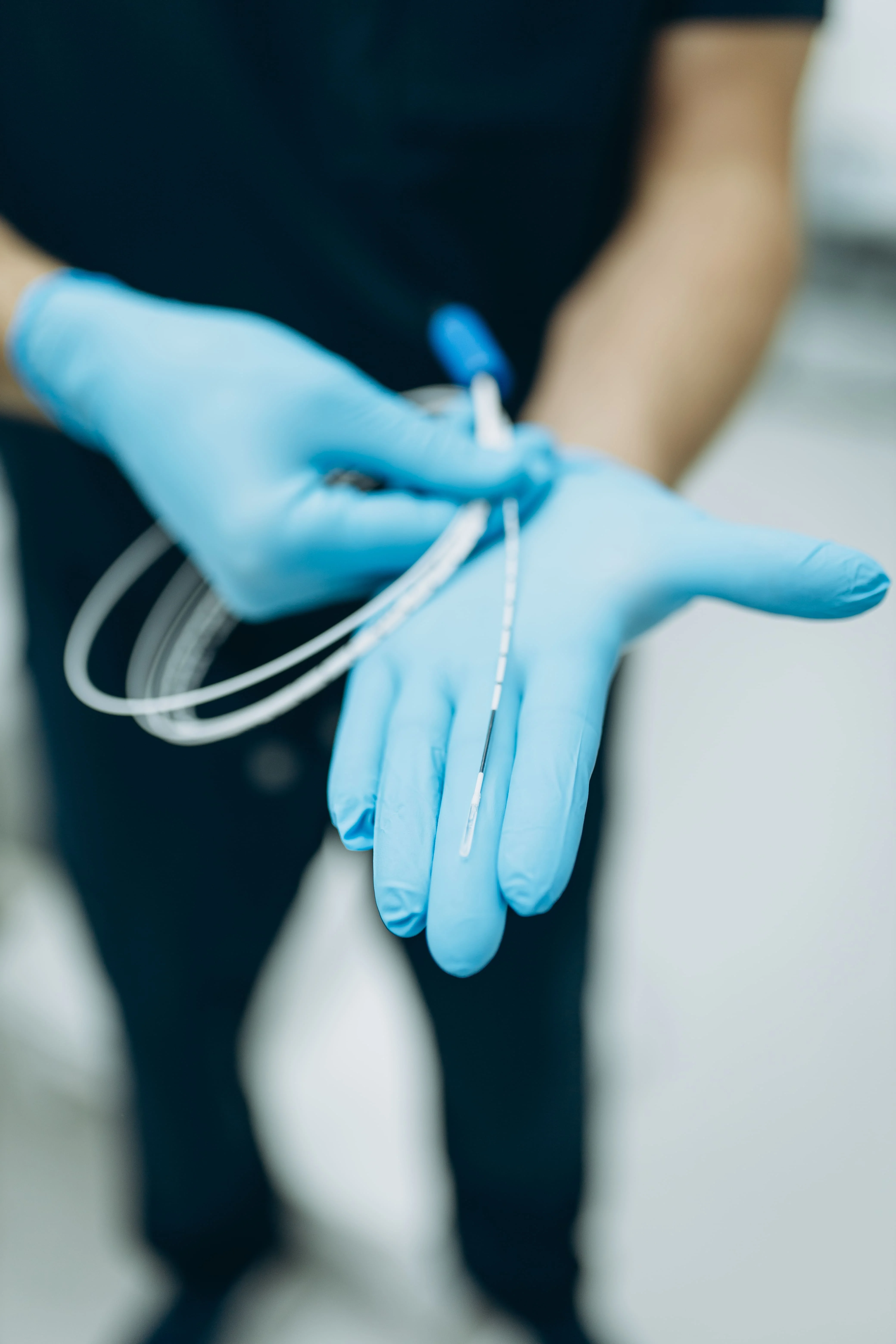
During the procedure, a special laser fiber — individual for each patient — is inserted into the target vein through a puncture. It generates thermal laser energy that acts on all layers of the affected vein wall and coagulates it. All stages of the procedure are performed with precise positioning under ultrasound guidance. Access is via punctures, with no sutures or skin incisions.
After the Procedure
Wearing compression garments as recommended by the doctor is mandatory after treatment.
Book a comprehensive consultation
with a phlebologist and vascular surgeon
We will respond as soon as possible
Take care of your vascular health today