

Mechanochemical Vein Ablation
Contraindications
- Pregnancy
- Acute decompensated conditions
- Skin infections of the lower limbs
- Thrombosis or occlusion of lower limb arteries
History of the Method
The chemical treatment of the inner surface of a vein for its subsequent obliteration was proposed by Tavel in 1904. In 1995, E. Ermish and U. Kaserberg published data on 11,000 surgical procedures using the principle of truncal catheter sclerotherapy.
Devices Used
The first system for mechanochemical ablation was ClariVein (Merit Medical, USA), which consists of a rotating wire that damages the endothelium for subsequent chemical ablation with a sclerosant. Another, newer device is Flebogrif (Balton, Warsaw, Poland).
How It Works
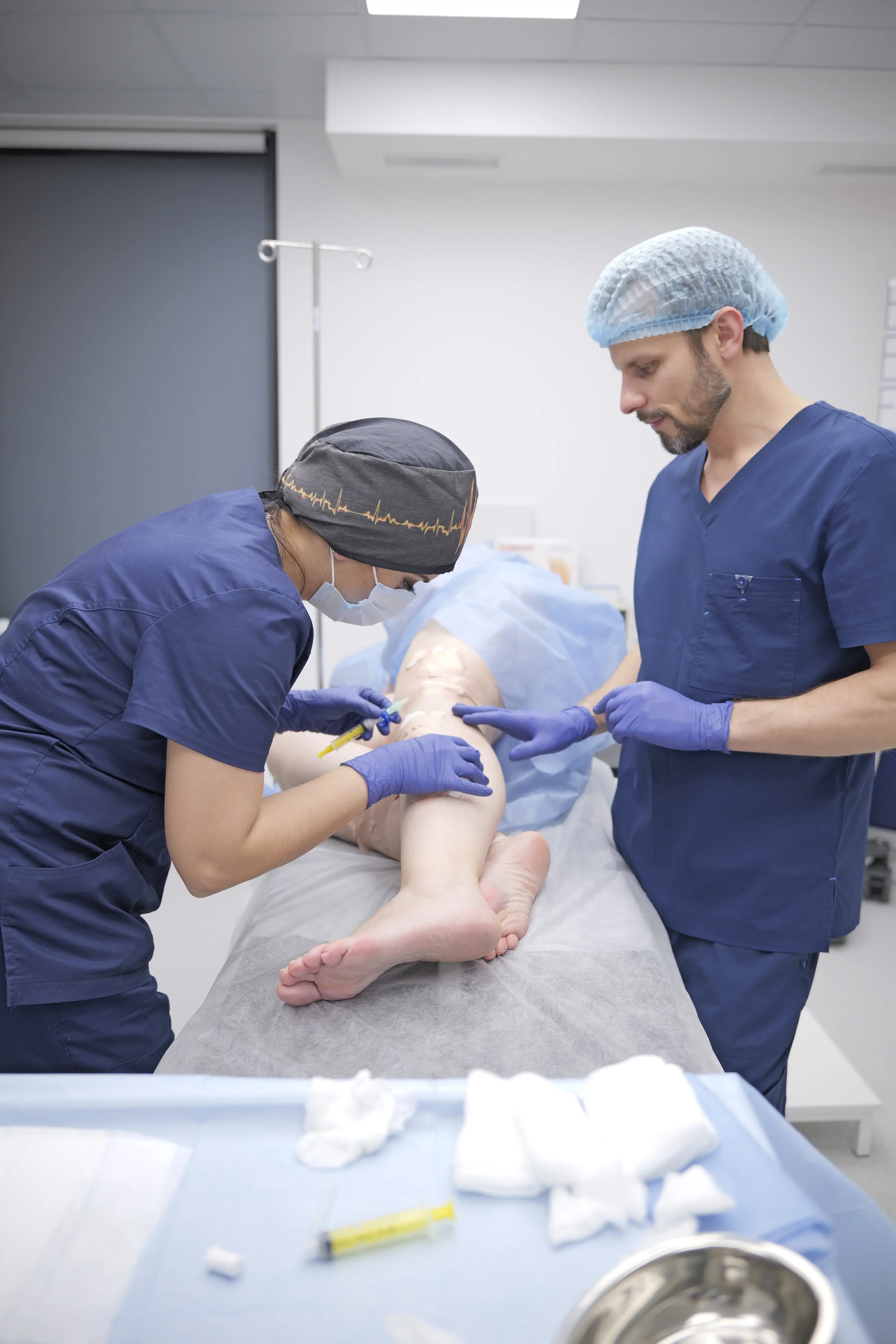
The method belongs to the non-thermal group of minimally invasive procedures and does not require local anesthesia or tumescence. It is most often performed through a single puncture. The system is single-use and includes a special delivery device with micro-hooks at the tip of the catheter. The principle of the method is a dual damaging action on the inner vein wall — mechanical and chemical (the sclerosant penetrates deeper into the vein than in classic sclerotherapy) — causing vein constriction, subsequent sealing, and resorption.
After the Procedure
Compression garments must be worn during the post-procedure period.
Book a comprehensive consultation
with a phlebologist and vascular surgeon
We will respond as soon as possible
Take care of your vascular health today