

Chronic Venous Disease and Varicose Veins: What Are the Stages and When Is Treatment Needed?
Varicose veins are one of the most common problems affecting the veins of the lower extremities.
In the early stages, the disease may manifest only as spider veins or a feeling of heaviness in the legs. Over time, enlarged veins, swelling, pain, skin changes and, in advanced cases, venous ulcers may appear.
That is why the question “What stage of varicose veins do I have?” is important not only from an aesthetic point of view. The condition of the veins should be assessed comprehensively — based on symptoms, clinical manifestations and the results of an ultrasound examination.
What is chronic venous disease?
Chronic venous disease (CVD) is a broad term that encompasses various disorders affecting the functioning of the venous system of the lower extremities.
One of the best-known manifestations is varicose veins — abnormally enlarged and tortuous veins that become visible beneath the skin.
Normally, venous valves help blood move from the legs toward the heart. If the valves do not function properly, some of the blood may flow backward — this is called pathological venous reflux.
As a result, the load on the venous system increases, and over time characteristic symptoms and tissue changes may develop.
What symptoms of varicose veins should not be ignored?
Varicose veins are not always just “blue veins on the legs.”
Possible symptoms include:
- heaviness in the legs;
- aching or painful sensations;
- a feeling of fullness or pressure;
- leg swelling, especially at the end of the day;
- itchy skin;
- night cramps;
- tired legs after prolonged standing;
- spider veins and reticular veins;
- bulging varicose veins;
- changes in the color and condition of the skin.
It is characteristic that some symptoms may become more pronounced after prolonged standing or sitting and may decrease after resting with the legs elevated.
Important: the presence or absence of visible veins does not always reflect the actual condition of the venous system.
Stages of venous disease: the CEAP classification
To describe chronic venous diseases, doctors use, among other systems, the CEAP classification.
It describes clinical manifestations of the disease from C0 to C6.
C0 — no visible signs of disease
A person may have symptoms such as:
- heaviness;
- tiredness of the legs;
- pain;
- discomfort;
but there may be no visible signs of venous disease during examination.
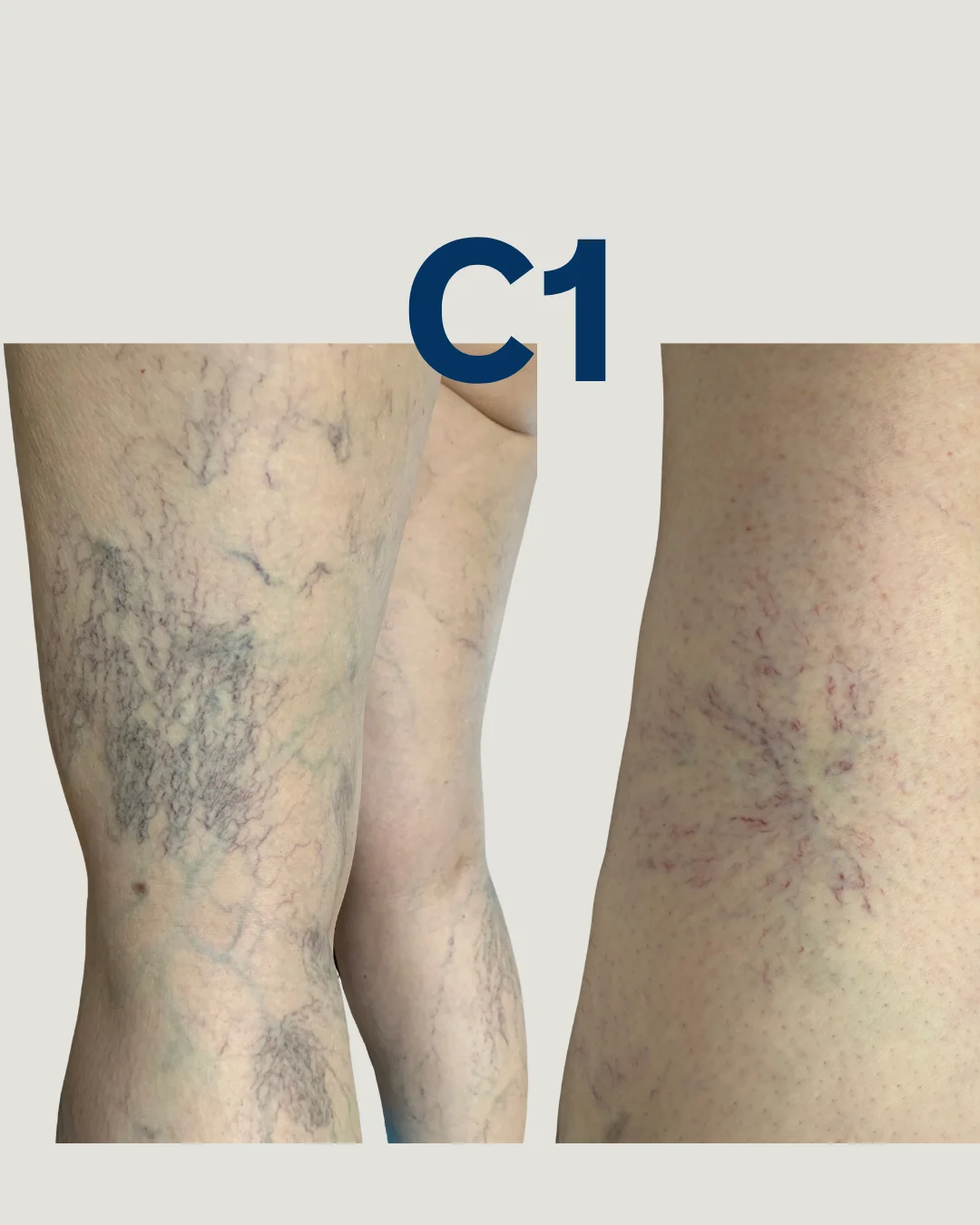
C1 — spider veins and small veins
The following may appear on the skin:
- telangiectasias;
- spider veins;
- small intradermal veins.
This does not necessarily mean that classic varicose veins are present, but it may be a manifestation of chronic venous disease.
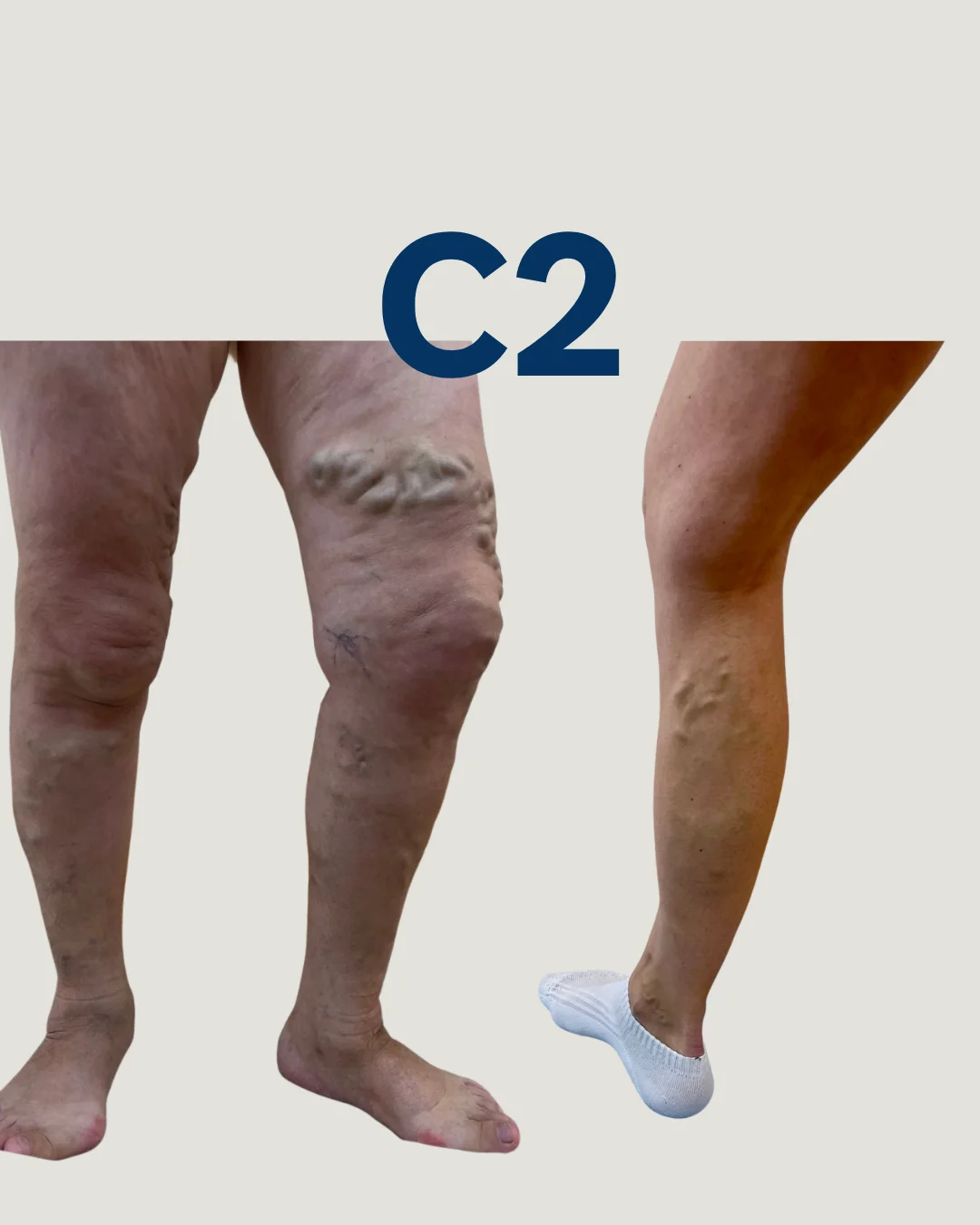
C2 — varicose veins
This is the stage most commonly referred to as varicose vein disease.
The veins become:
- enlarged;
- tortuous;
- visible beneath the skin;
- sometimes bulging above the skin surface.
At this stage, pain, heaviness, tiredness and other symptoms may already occur.
For symptomatic varicose veins, modern clinical guidelines consider interventional treatment as one of the treatment options after appropriate diagnostic evaluation.
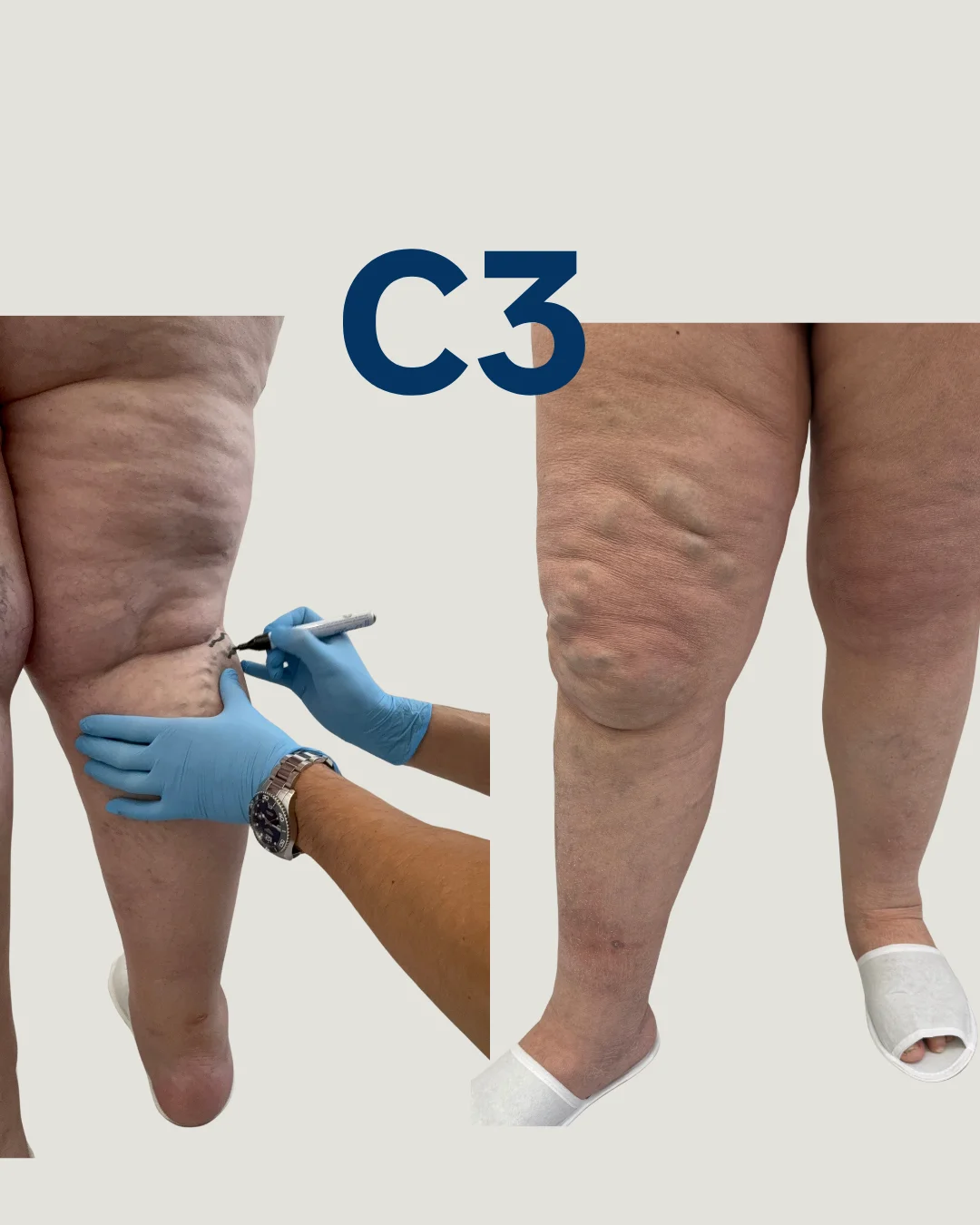
C3 — varicose veins + swelling
In addition to visible changes, swelling of the lower extremities develops.
Patients most often notice:
“By the evening, my legs become heavy and swollen, while in the morning the swelling is less.”
At this stage, it is important not to attribute persistent swelling simply to fatigue. The causes of swelling can be different, so its origin should be established before planning treatment.
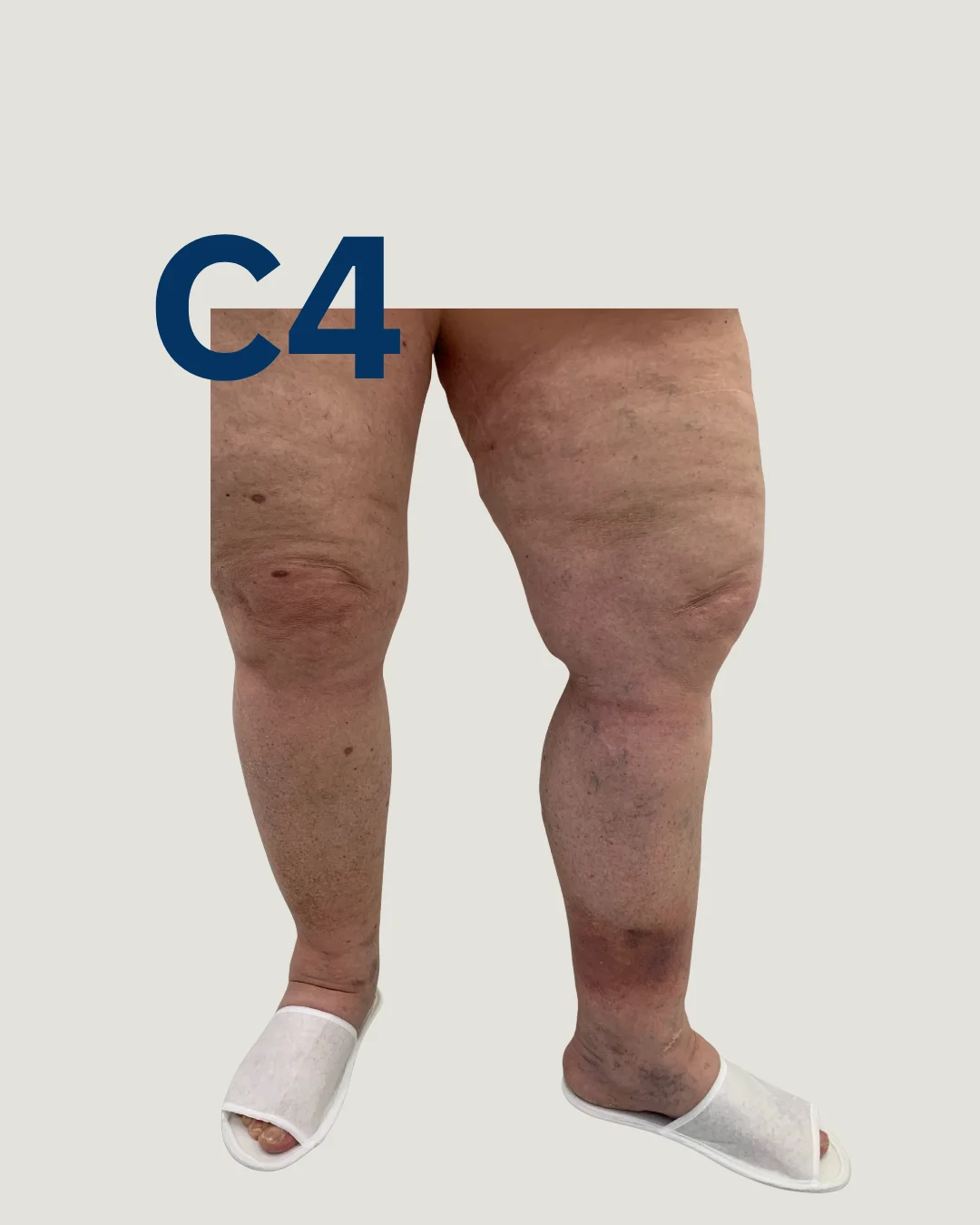
C4 — skin changes
As chronic venous disease progresses, skin changes may occur:
- darkening or pigmentation;
- venous eczema;
- thickening of the skin and subcutaneous tissue;
- other trophic changes.
This is no longer simply an aesthetic problem.
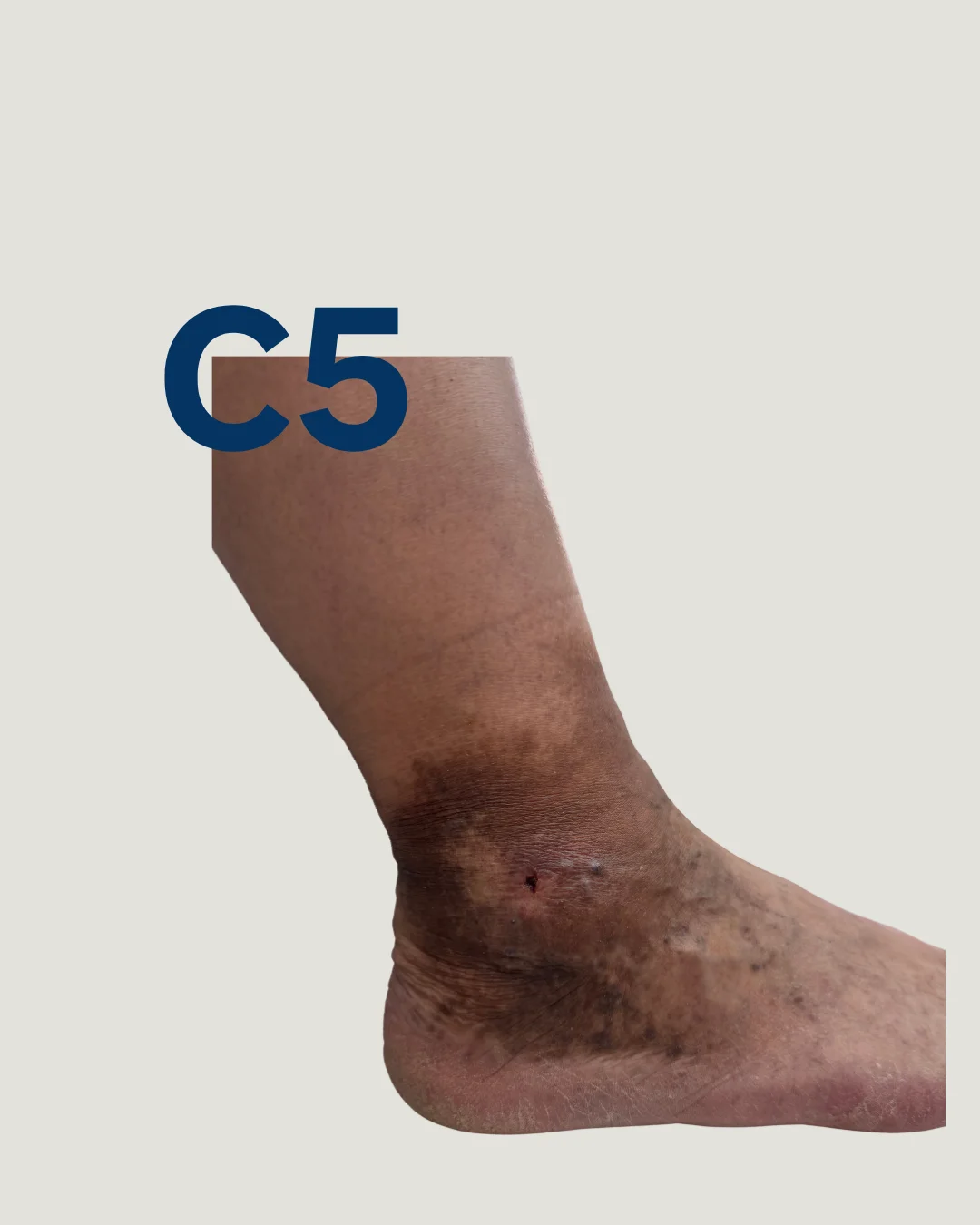
C5 — healed venous ulcer
At this stage, a venous ulcer has previously occurred, but at the time of assessment it has healed.
Even if the skin now looks better, the underlying cause that led to the ulcer requires assessment and treatment.
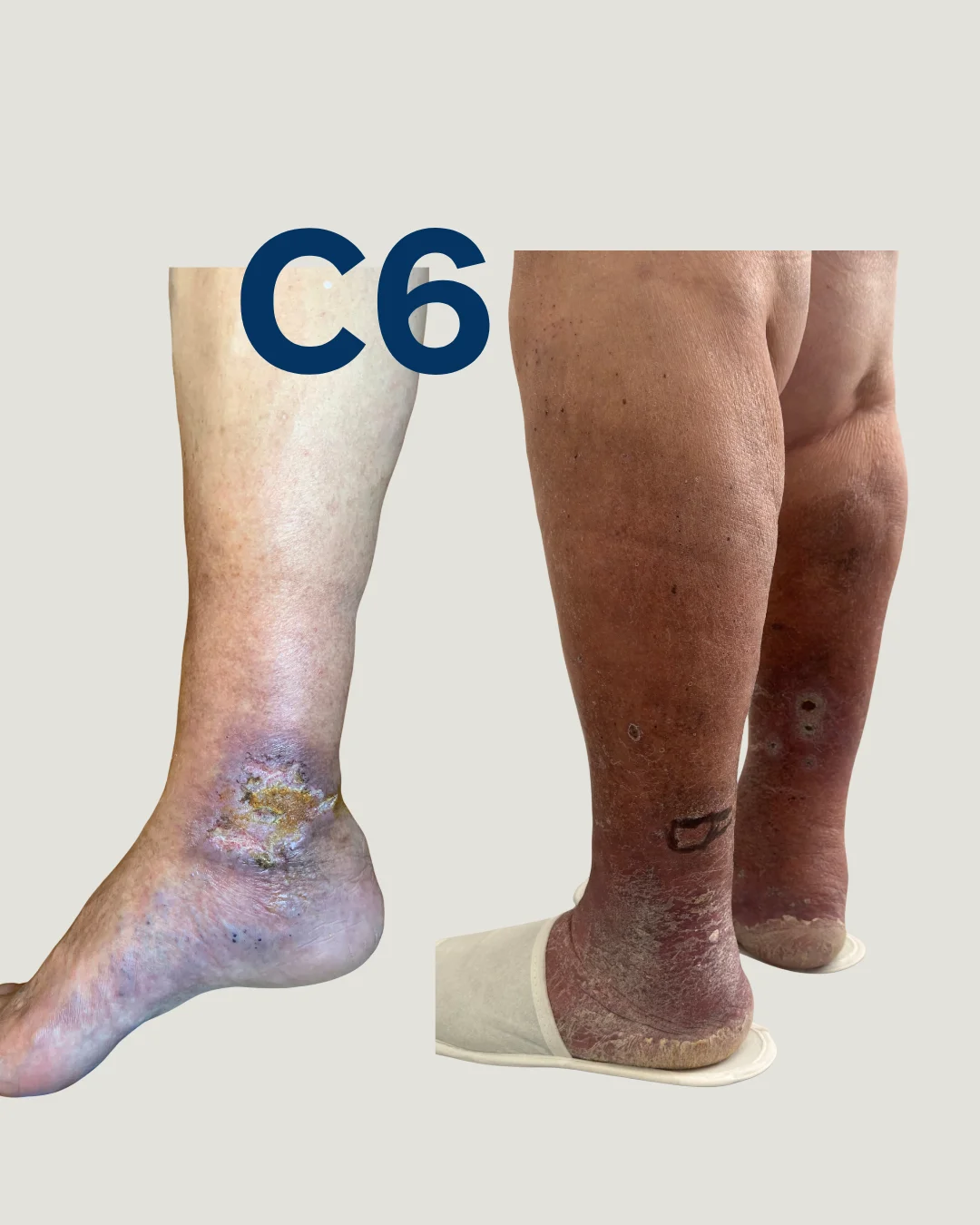
C6 — active venous ulcer
This is the most pronounced clinical manifestation in the CEAP classification — an active venous ulcer of the lower extremity.
This is why it is not advisable to wait for varicose veins to “move on” to the next stage.
Is it necessary to treat varicose veins if they do not hurt?
The absence of pain does not mean the absence of disease.
Varicose veins can exist for a long time without pronounced symptoms. At the same time, some people gradually develop swelling, pain, skin changes or other manifestations of chronic venous disease.
Therefore, the decision about whether treatment is necessary is based not only on the appearance of the veins.
It is important to assess:
symptoms → clinical picture → venous anatomy → blood flow → presence of pathological reflux.
How are varicose veins diagnosed?
One of the key examinations is ultrasound of the veins of the lower extremities (duplex ultrasound scanning).
The examination makes it possible to assess blood flow, venous anatomy and identify pathological venous reflux.
Therefore, the correct approach to varicose vein treatment begins not with choosing a procedure, but with proper diagnosis.
Can varicose veins be treated?
Today, there are various methods for treating varicose vein disease and chronic venous disease.
Depending on the clinical situation, the following may be used:
- conservative methods;
- compression therapy in appropriate cases;
- sclerotherapy;
- endovenous thermal techniques;
- other minimally invasive methods;
- surgical treatment — when indicated.
The choice of method depends on venous anatomy, the source of reflux, the diameter and characteristics of the veins, symptoms and ultrasound findings.
Clinical guidelines also emphasize the need for an individualized approach to treatment.
Does exercise and leg gymnastics help with varicose veins?
Regular physical activity, including walking, can support venous blood flow and help reduce some symptoms. It is also beneficial to avoid prolonged periods of sitting or standing without movement.
But there is an important point:
exercise does not eliminate pathological venous reflux and cannot replace diagnosis and treatment of varicose vein disease when they are indicated.
When should you see a phlebologist?
You should not postpone a consultation if you have:
varicose veins + pain
leg swelling
persistent heaviness or tiredness
itching or skin changes
spider veins that bother you
trophic changes or wounds that take a long time to heal
varicose veins that are gradually progressing.
Particular attention should be paid to sudden one-sided swelling, pain, redness or other acute changes — in such cases, timely medical assessment is necessary.
Varicose veins are not only about the beauty of your legs
Visible veins may be only part of the problem.
Behind the external manifestations there may be impaired function of the venous valves, pathological reflux or another problem affecting the venous system.
Therefore, the correct algorithm is:
Phlebologist consultation → vein ultrasound → diagnosis → individualized treatment plan.
At ENDOVEIN, we help patients understand the condition of their veins, determine the cause of symptoms and select a treatment strategy according to the clinical situation.
If you are bothered by varicose veins, pain, swelling or heaviness in your legs — do not wait for complications to develop.
Book a consultation with a phlebologist and a vein ultrasound examination.
Book a comprehensive consultation
with a phlebologist and vascular surgeon
We will respond as soon as possible
Take care of your vascular health today